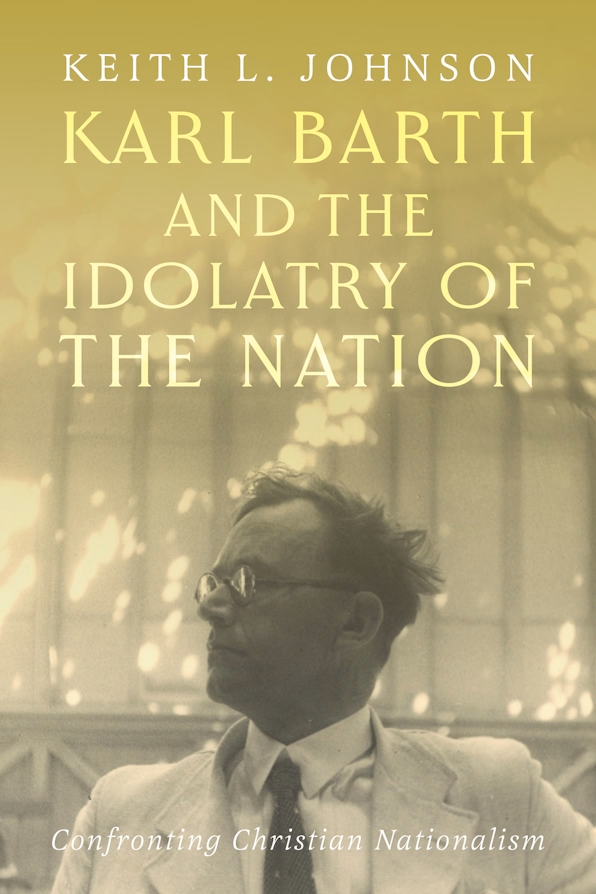
Karl Barth and the Idolatry of the Nation: Confronting Christian Nationalism
Baylor University Press, October 2026
In the early 1930s, German Christians told a story that placed their nation at the center of God’s purposes for history. They merged loyalty to God with loyalty to the state, blurred divine and national identity, and replaced God’s law with human law. Karl Barth spent five years resisting that theology — in sermons, lectures, essays, letters, and the church-political meetings where the German church decided what it would become. This book follows him through those years, and argues that Hitler did not create the German church’s crisis but exposed it: a centuries-long habit of setting Jesus Christ alongside other authorities, which left the church defenseless against a false gospel. The question Barth pressed on the Germans is the one this book presses on us. What must the church become in order to remain faithful to Jesus Christ?
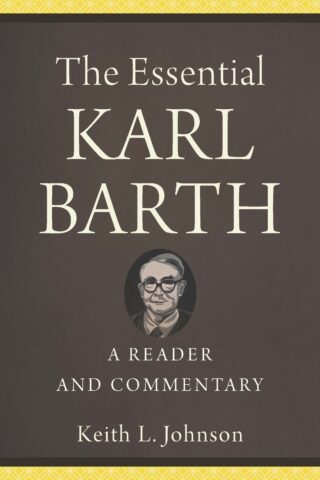
The Essential Karl Barth: A Reader and Commentary
Baker Academic, 2019
This volume gathers selections from across Barth’s career, supplemented by introductory essays and annotation throughout.
This is an astonishingly helpful book. Johnson’s introductions are clear, elegant, and effortlessly learned.
Kevin W. Hector, University of Chicago Divinity School
Karl Barth and the Analogia Entis
T&T Clark Studies in Systematic Theology · T&T Clark, 2010
An account of Barth’s lifelong engagement with the Roman Catholic doctrine of the analogia entis, from the beginning of his career to its end, with close readings of Erich Przywara, Gottlieb Söhngen, and Hans Urs von Balthasar.
Perhaps the best work on this demanding topic ever to have been written.
George Hunsinger, Princeton Theological Seminary
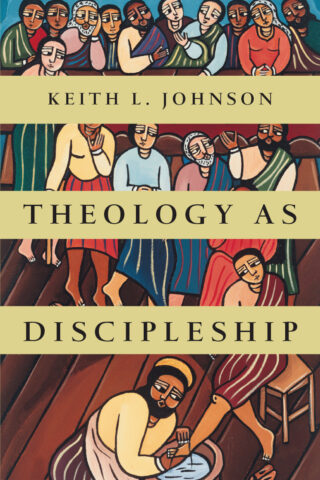
Theology as Discipleship
IVP Academic, 2015
Over the years, I have found that many of my students have a hard time connecting the study of theology with the practices of Christian discipleship. This book offers a constructive account of how the two belong together.
This is theology that is saturated with Scripture, humbly centered on Christ and the gospel.
Thomas H. McCall, Asbury University
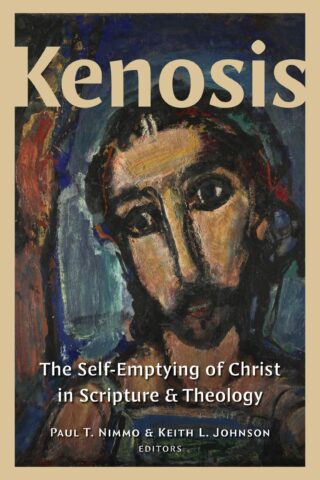
Kenosis: The Self-Emptying of Christ in Scripture and Theology
Co-edited with Paul T. Nimmo · Eerdmans, 2022
Scholars from across the ecumenical spectrum trace the biblical roots, historical development, and contemporary implications of kenosis. Published in honor of Bruce McCormack’s retirement from Princeton Theological Seminary.
Without question, this is the most helpful and creative collection of essays on kenosis that currently exists.
Tom Greggs, University of Aberdeen
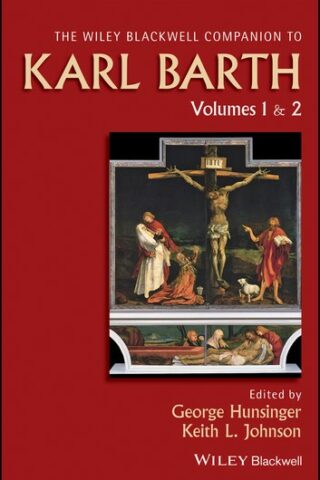
The Wiley-Blackwell Companion to Karl Barth
Co-edited with George Hunsinger · 2 vols. · Wiley-Blackwell, 2020
Sixty-six chapters by leading scholars. Volume One treats Barth’s dogmatic theology; Volume Two situates him among the figures, movements, and events that shaped him.
T&T Clark Companion to the Doctrine of Sin
Co-edited with David Lauber · Bloomsbury T&T Clark, 2016
Thirty essays covering the biblical and rabbinic accounts of sin, its treatment across the history of Christian thought, and its implications for the doctrines of God, creation, anthropology, and salvation.
This volume of lucid essays presents a comprehensive account of the theology of sin…
John Webster, University of St Andrews
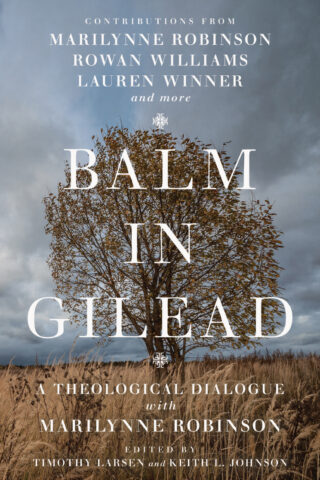
Balm in Gilead: A Theological Dialogue with Marilynne Robinson
Co-edited with Timothy Larsen · IVP Academic, 2019
From the 2018 Wheaton Theology Conference, with chapters by Marilynne Robinson, Rowan Williams, Lauren Winner, and others.
Marilynne Robinson’s work is saturated in theology.
Jeremy Begbie, Duke University
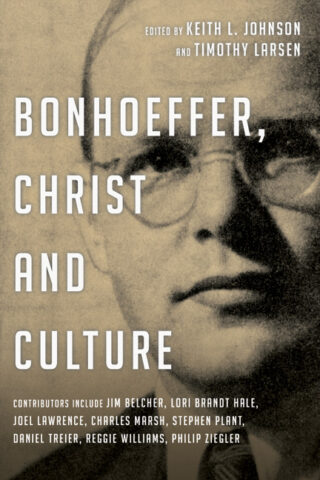
Bonhoeffer, Christ and Culture
Co-edited with Timothy Larsen · InterVarsity Press, 2013
From the 2012 Wheaton Theology Conference, with chapters by Philip Ziegler, Timothy Larsen, Reggie Williams, and others.
Having spent the past fifty years of my life engaged in dialogue with Bonhoeffer’s legacy, I am delighted to be introduced to new perspectives and interpretations, and to learn again from those whose contribution to Bonhoeffer studies is now well established. I commend it to all who want to know Bonhoeffer better.
John W. de Gruchy, University of Cape Town